The problem
Family bingo is still run by hand: someone calls numbers out of a bag, someone else writes down which ones came up, and every player scans a paper card by eye. Numbers get called twice, the count gets lost, and when somebody shouts bingo the whole game has to be reconstructed to verify it. It's a social game held back by its own bookkeeping.
What we did
We built Bingoo as our own product: four tools for the same game night.
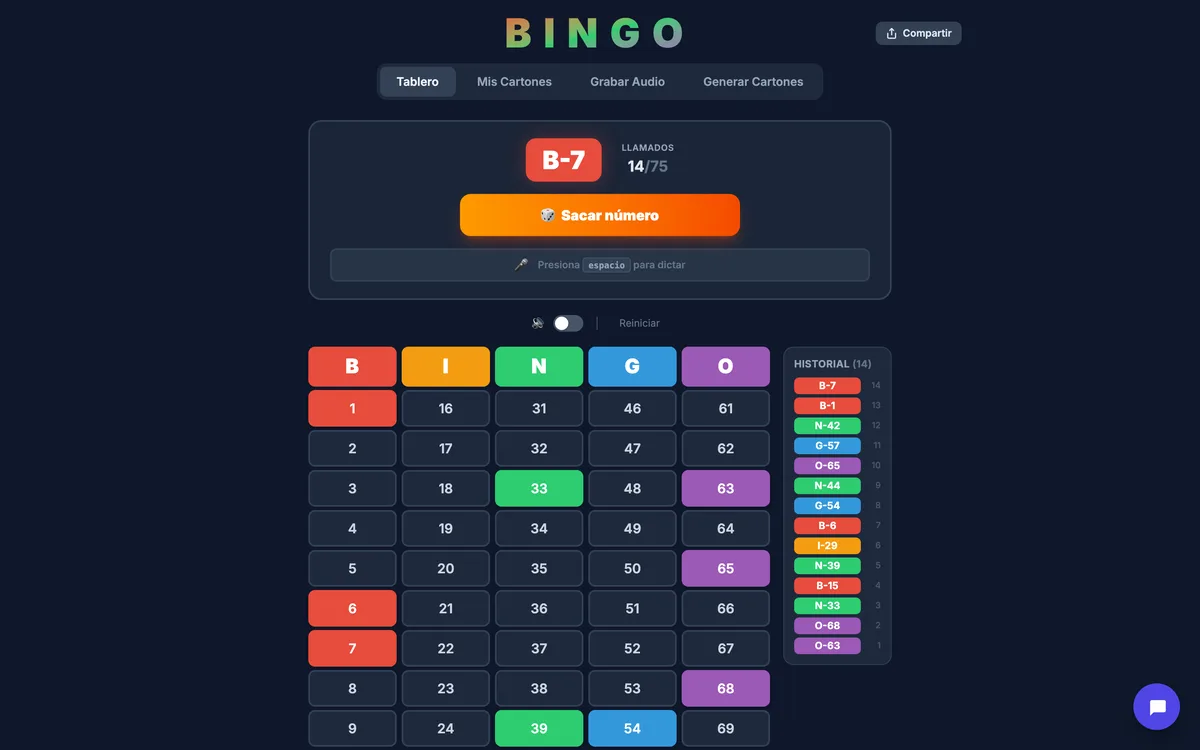
The board keeps track of all 75 numbers and works by voice — you call the number and the app marks it, with recognition tuned to Chilean Spanish, so "cuarenta y dos" is understood without spelling it out. There are five game modes: full card, L, U, O and X, each with its own winning pattern.
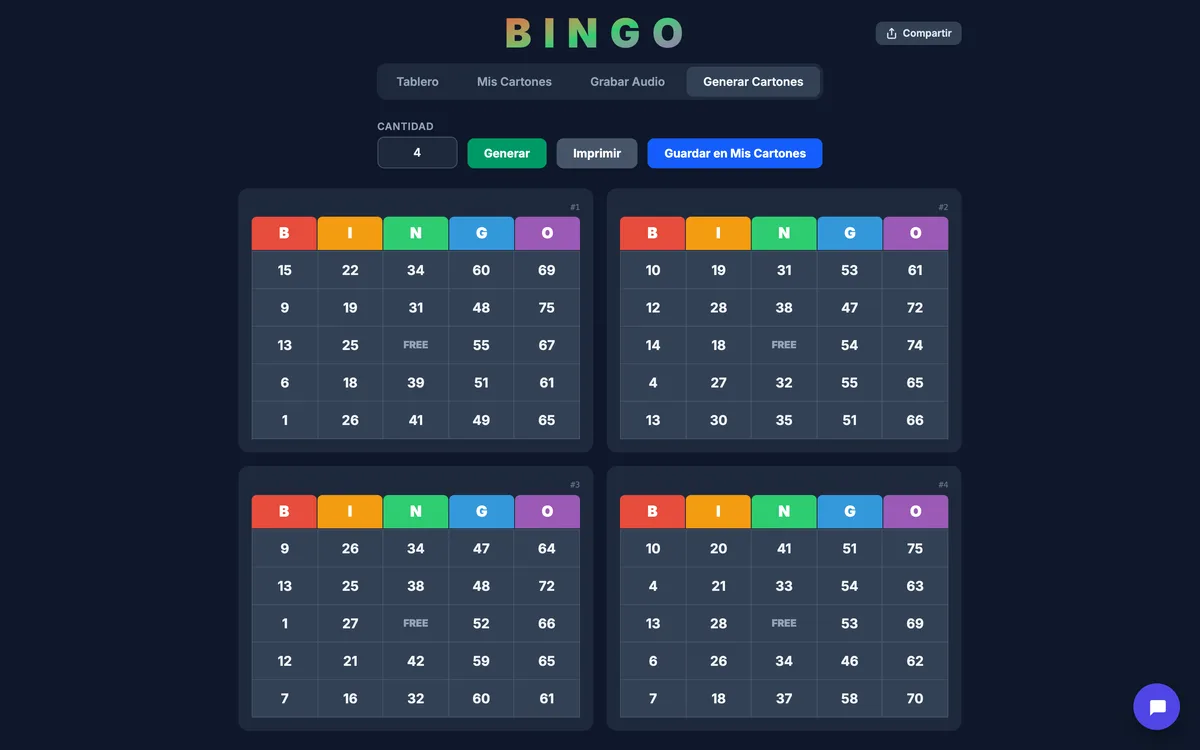
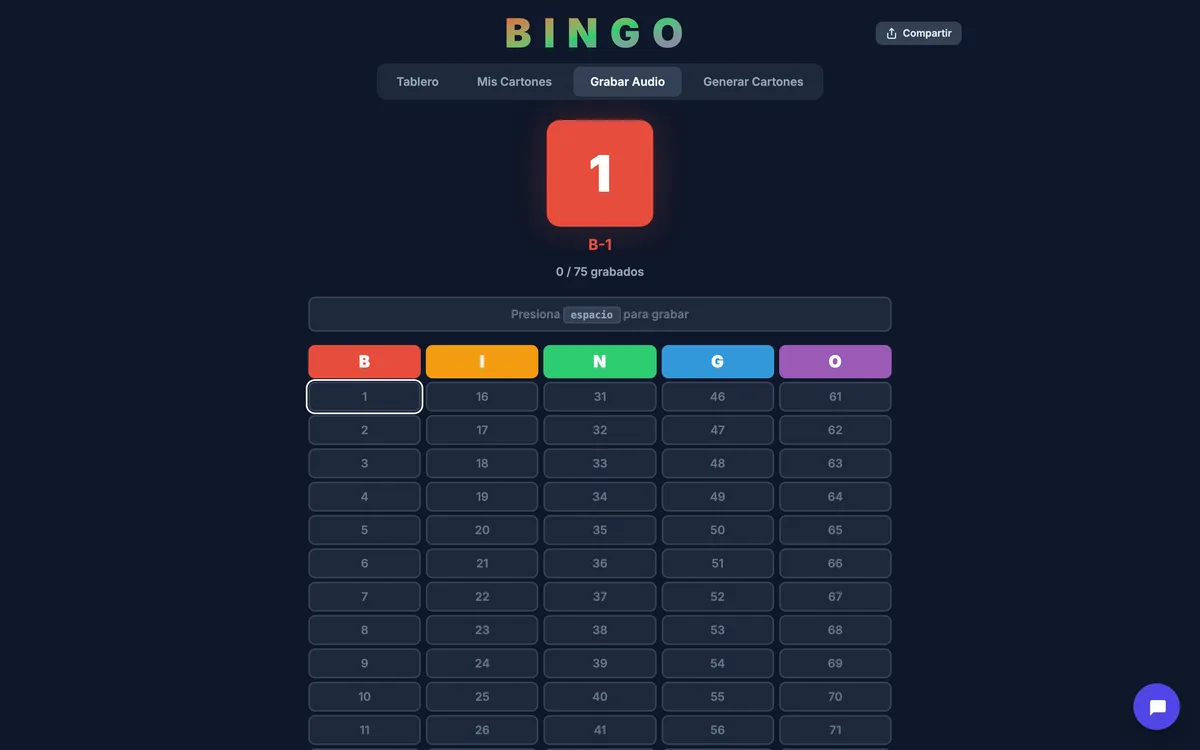
My cards solves the tedious part: photograph the physical card and AI vision reads the numbers and digitises it. Nobody types twenty-five squares by hand. The generator builds random printable cards when you don't have physical ones, and the recorder lets you call all 75 numbers in your own voice and download them as audio to use during the game.
The outcome
An app you open and use: no signup, no install, no server of our own — all state lives in the browser. It's a small, honest example of where to put AI: not in the marketing, but in the one step that genuinely bores the person using it. We measure it with Kilden, our own product-data platform.